Why Miami’s Wealth Migration Is Reshaping US Real Estate Markets
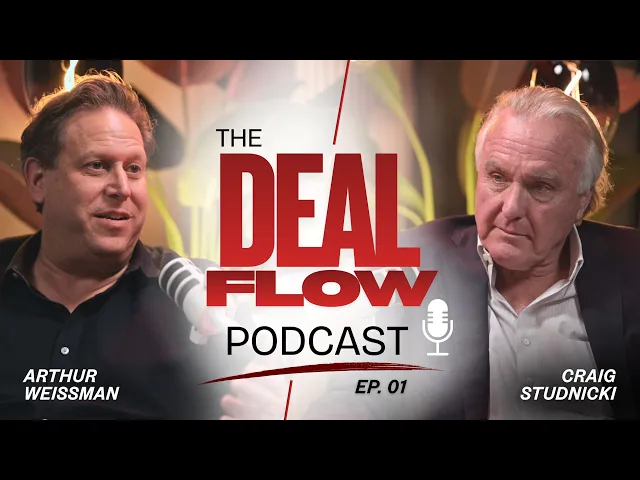
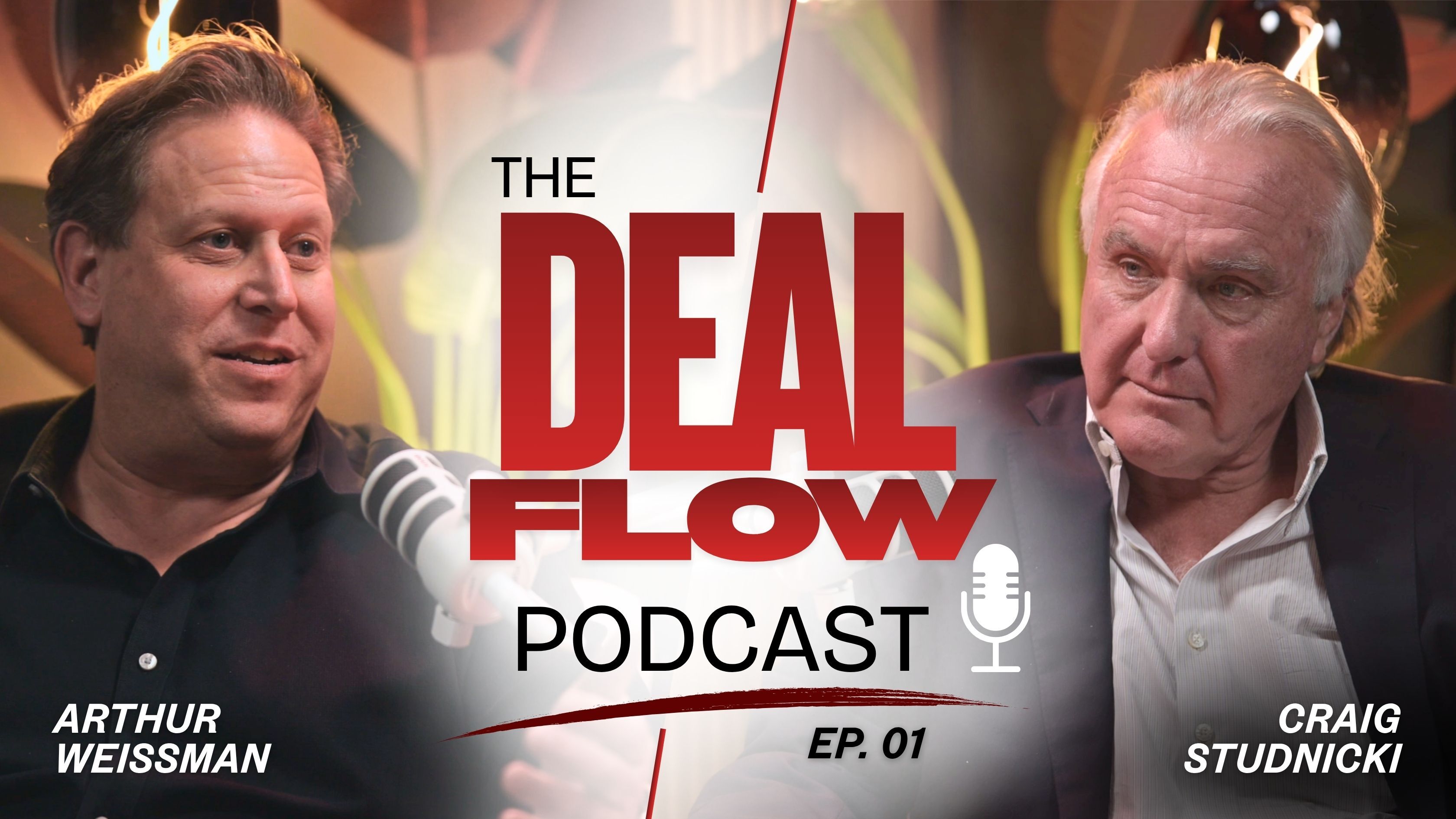
The Deal Flow with Arthur Weissman — featuring Craig Studnicki, Founder & CEO of International Sales Group
How One Miami Operator Built a $10 Billion Sales Machine — and Survived Every Crash Doing It
Craig Studnicki has been selling Miami condominiums since 1994. In that time he's made it through three market crashes, built a network of over 5,000 brokers across North and South America, and quietly become the go-to sales partner for the biggest real estate developers in South Florida.
He wasn't supposed to end up here. He graduated Virginia Tech in 1978, fell into condo sales in Washington DC almost by accident, transferred to New York, and got recruited to Miami in 1991 by one of the city's most prominent developers. What he found was a melting pot unlike anything he'd worked in — not Europe and Asia, but North and South America. And almost nobody in the Miami development world had figured out how to tap it.
He did.
The model that's kept him in business for 32 years
ISG's business model is simple: Craig takes a 3% commission on every condo sold. No retainers. No monthly fees. He gets paid when the developer gets paid.
On a $500 million project, that's $15 million — but only when units close. That alignment is intentional. Craig wants to move as fast as the developer does. He's not billing hours. He's not padding a statement of work. He wins when his client wins.
What makes the model work is how early ISG gets involved. Craig prefers to be brought in before the architect is hired — before the building is designed. He consults on floor plans, unit mix, amenities, and pricing based on what he's seeing on the front lines of the market every day. Then he manages sales through to completion.
"Every developer that's invited me for the takeoff, I've been with them at the landing," Craig said. "I'm soup to nuts. I stay there the whole time."
That commitment is rare. And it's why ISG's phone rings every time a new project is announced.
The three things he's done the same way for 32 years
When asked what's kept ISG alive through the early 2000s crash, 2008, COVID, and everything in between, Craig pointed to three things he's never stopped doing.
Prospecting. He spent years building broker relationships across Latin America — Mexico City to Buenos Aires — creating a buyer pipeline that no local competitor could replicate. The network now sits at over 5,000 brokers worldwide.
Perfecting the presentation. Miami's buyer profile changes constantly. What people wanted in a condo ten years ago is completely different from what they want today. Craig tracks it obsessively because his livelihood depends on knowing.
Follow-up. Always. Without exception.
"No different than a general contractor," he said. "I finish what I start."
The Miami Report: how a defensive move became a distribution engine
After 2008, the New York Times ran a series of stories on the Miami real estate market that Craig believed were wrong. He was annoyed enough to build a rebuttal — a quarterly market study he called the Miami Report.
It was originally just to keep his sales team motivated. It became something much bigger.
The Miami Report now gets distributed to ISG's entire global broker network. Developers send it to their lenders and limited partners. Craig takes it to New York to present to construction lenders and major brokerage firms. At its peak, a single edition hit over 500,000 views on YouTube.
What started as a defensive piece of content became ISG's most powerful trust-building tool. Craig writes it himself — quarterly, without fail — because he understands something most operators miss: being the most credible voice in your market is a competitive advantage that compounds.
Why he's raising capital now
After three decades of staying deliberately small, Craig is raising capital for the first time — and the reason is timing.
The wealth migration he's tracked for years has hit an inflection point. Over 220 Fortune 400 and 500 companies have relocated to South Florida since COVID. New Yorkers, Californians, and Chicagoans are leaving for lower taxes and a better business environment. The Middle East, Europe, and Latin America are all pointing to Miami as a safe, premium destination for real estate investment.
Craig wants to follow that wave into the rest of Florida. Palm Beach. Naples. Sarasota. Tampa. These are markets growing fast — and markets where ISG doesn't yet have a physical presence. The capital raise pays for offices, senior talent, and a deeper international broker network.
"The two fastest-growing states in the US by population are Florida and Texas," he said. "ISG can become very dominant in the state of Florida. I see no reason to go anywhere else."
Three reasons he thinks you should pay attention
When Arthur Weissman asked Craig directly why an investor should be excited about ISG, he gave three answers.
The brand. Thirty-two years. A 90% success rate on projects — and he finished the other 10% anyway. "That's how I maintain my reputation."
The network. Over 5,000 brokers worldwide. End users and investors who follow ISG from project to project. A phone that rings off the hook the moment a new project is announced.
Miami. "Investing in ISG is really investing in the future of Miami," Craig said. "Miami won't let you down." Five of the world's major capital centers — the Middle East, Europe, Northeast US, California, and South America — are all closer to Miami than they are to each other. The former mayor said it. Ken Griffin said it. The data says it.
Watch the full conversation
Craig Studnicki joined Arthur Weissman on The Deal Flow to share the full story — how ISG started, how it survived, what he's building next, and what the next decade of Miami looks like for developers, brokers, and investors.
Interested in learning more about ISG or exploring an investment? https://isgworld.investsecure.co/
The Latest
Why Accredited Investors Are Choosing Income Over Appreciation
Steve of Solaris on why monthly income beats traditional real estate returns.

Institutional Operators Don't Manage Investors. Their Systems Do
The operational playbook for sponsors who want to scale retail capital.

Why Institutional Operators Are Building Perpetual Capital Platforms
Operators are moving away from deal-by-deal fundraising, and you should be too.
Why Miami’s Wealth Migration Is Reshaping US Real Estate Markets
The Deal Flow with Arthur Weissman — Craig Studnicki, Founder & CEO of ISG
The Reason Most Second Raises Take Longer Than the First
Great deals stall without great process. Here's what investors actually evaluate.