Your First Raise Was A Proof Of Concept. Your Second One Is A Platform.
Most operators treat their second raise like a bigger version of their first. Same approach, more emails, more outreach, more hustle. And then they are surprised when it takes just as long, or longer, than the first one did.
Here is what is actually happening: your first raise was not a capital-raising operation. It was a proof of concept. You were testing whether your deal was fundable, whether your story landed, whether people trusted you enough to write a check. You were figuring it out.
That is fine. That is what a first raise is for.
But your second raise cannot be another proof of concept. It needs to be a platform.
The operators who scale are not raising more aggressively. They are raising more systematically.
What changes after you close Fund I
When you close your first raise, you cross a threshold that most operators underestimate. You now have a track record, which means you have something institutional LPs will want to diligence. You have existing investors who are forming opinions about whether they will back you again. And you have the attention of a larger pool of potential investors who have heard your name.
None of that existed before your first raise. All of it exists now.
The problem is that most operators are not set up to capitalize on it. They closed Fund I using a combination of personal relationships, email threads, PDFs, and sheer force of will. There is no investor database. No documented onboarding process. No portal that lets existing LPs log in and see their investment. No system to stay in front of warm leads between raises.
So when Fund II launches, they start from scratch. Again.
The three infrastructure decisions that determine whether you scale or stall
In our experience working with operators across real estate, private credit, and private equity, the difference between those who scale and those who plateau almost always comes down to three decisions. And most operators make them too late.
1. How you manage your investor relationships
Not your personal relationships. Your operational ones. Do your investors have a dedicated portal where they can access documents, track performance, and receive updates? Can you segment your LP base by interest level, check size, or asset class? Can you communicate with 200 investors as easily as with 10?
If the answer to any of those is no, you are not operating a capital platform. You are operating a personal network. And personal networks do not scale.
2. How you onboard new investors
Investor onboarding is where most operators lose deals they should have closed. The investor is interested, they have said yes in principle, and then they hit a friction wall: PDFs that need to be printed, signed, and scanned; accreditation verification that feels like an audit; subscription agreements buried in email threads.
Every hour of friction at this stage increases the chance they do not close. A compliant, streamlined onboarding flow is not just good operations. It is a conversion tool.
3. How you document and administer the fund
Clean cap tables. Properly executed subscription agreements. Organized records that survive an LP diligence request or a regulatory review. This is the part that nobody talks about until it becomes a crisis.
Institutional LPs and the larger family offices and RIAs you are trying to reach in Fund II will ask about your back office. If you cannot answer clearly and confidently, the deal slows down. If they see spreadsheets and ad hoc systems, it signals risk. Not because of your deal, but because of your operation.
Why winging it the second time creates exponential risk
Your first raise had a certain risk profile. If your onboarding was messy, a patient early investor forgave it. If your cap table had errors, a small raise made them manageable. If your reporting was informal, investors who knew you personally did not push back.
None of that holds at scale.
When you are raising a larger fund from a broader LP base, the people you are talking to do not know you personally. They are evaluating your operation on its own merits. An onboarding process that worked fine for 15 investors will actively turn off the institutional LP you are trying to land for Fund II.
And the errors compound. A messy cap table on a $5M raise is a hassle. On a $30M raise, it is a liability.
Structure signals credibility before performance ever does. For a Fund II raise, that signal is everything.
What it looks like when you get it right
The operators who have figured this out do not raise harder for Fund II. They raise differently.
They launch with a portal already live, so existing LPs can see their Fund I investment alongside the new opportunity. They have a documented investor onboarding flow that takes days instead of weeks. Their cap table is current, clean, and ready for diligence on day one. They have a CRM that shows them which warm leads to prioritize, and an investor communication system that keeps them in front of those leads without manual effort.
The raise does not feel like a scramble. It feels like a process.
That is what a capital platform looks like. And it is what separates the operators who close Fund II in 60 days from the ones who are still raising 18 months later.
The takeaway
Your first raise proved your deal could get funded. Your second raise needs to prove your operation can scale.
The infrastructure you build between those two raises, the investor portal, the onboarding system, the cap table hygiene, the fund administration process, is not overhead. It is the machine that produces the raise.
Build the machine before you need it.
AxisKey is the capital platform built for operators who are serious about Fund II and beyond.
The Latest
Why Accredited Investors Are Choosing Income Over Appreciation
Steve of Solaris on why monthly income beats traditional real estate returns.

Institutional Operators Don't Manage Investors. Their Systems Do
The operational playbook for sponsors who want to scale retail capital.

Why Institutional Operators Are Building Perpetual Capital Platforms
Operators are moving away from deal-by-deal fundraising, and you should be too.
Why Miami’s Wealth Migration Is Reshaping US Real Estate Markets
The Deal Flow with Arthur Weissman — Craig Studnicki, Founder & CEO of ISG
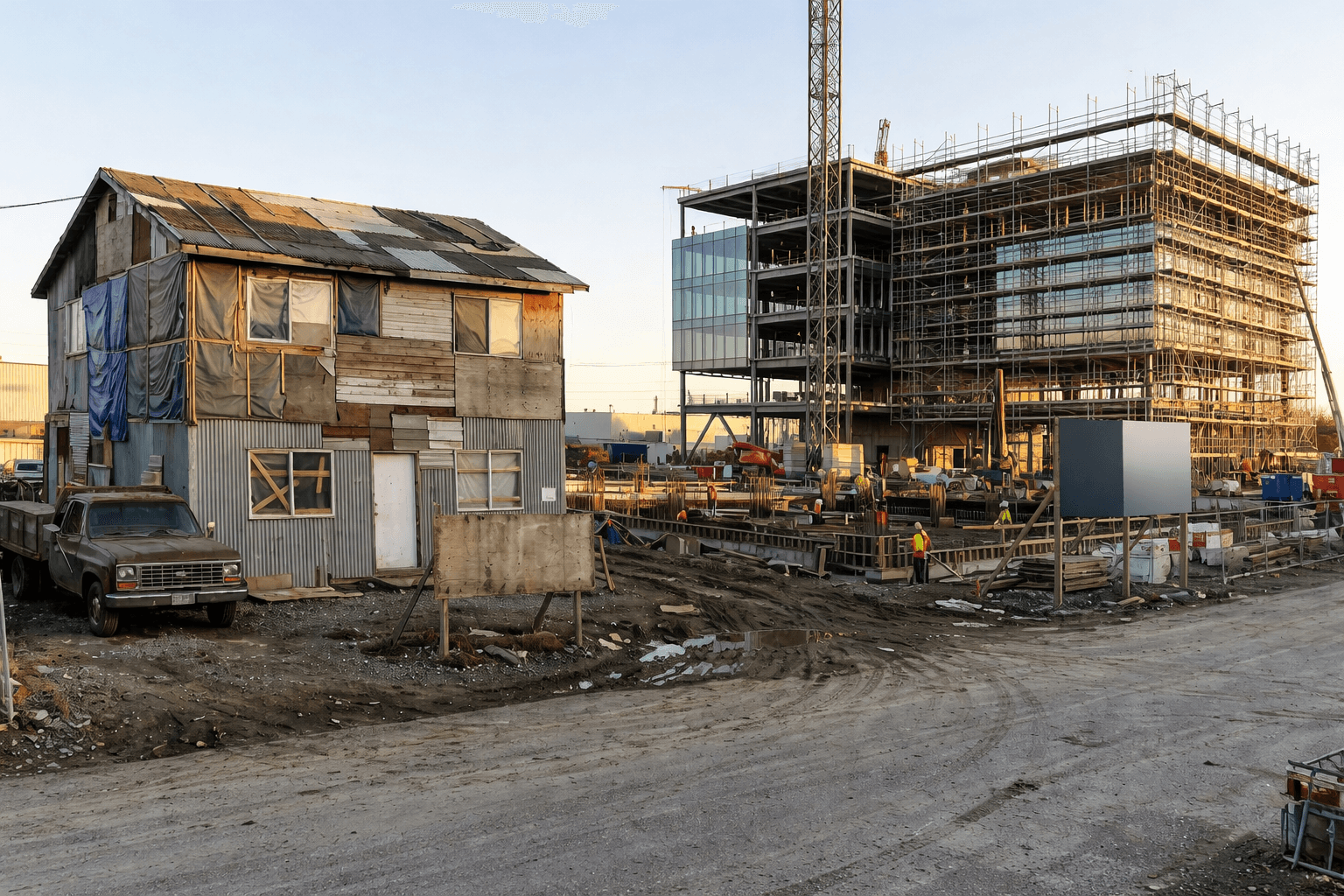
The Reason Most Second Raises Take Longer Than the First
Great deals stall without great process. Here's what investors actually evaluate.